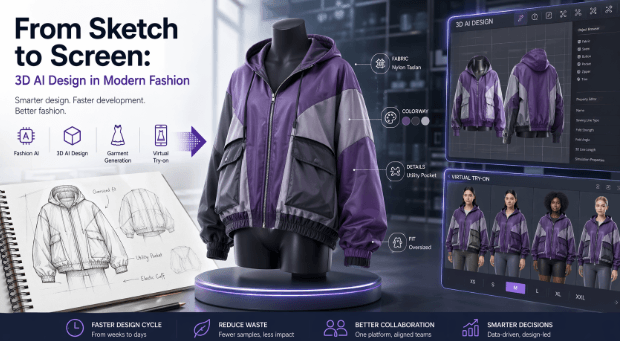
The Digital Shift in Fashion Development
Fashion has always balanced art and precision. A strong collection begins with imagination, but it also depends on timing, fit, materials, and production choices that can either support a vision or slow it down. In the past, that process often meant sketching by hand, building several physical samples, adjusting patterns through trial and error, and waiting days or weeks to see whether an idea would truly work. Today, that rhythm is changing fast.
Modern design teams are under constant pressure to move quicker without lowering quality. They need shorter development cycles, fewer wasted materials, and clearer communication between creative and technical departments. Digital tools are no longer optional extras. They are now part of the foundation of how fashion is built, tested, and presented.
One of the most exciting shifts in this space is the rise of intelligent 3D systems that help transform early concepts into realistic, production-ready visuals. The conversation around fashion AI, 3D AI design, garment generation, virtual try-on has moved from niche innovation to practical business value. Brands are now using these tools not simply to keep up, but to design with confidence.
How 3D AI Design Turns Ideas into Wearable Concepts
A sketch can capture mood, silhouette, and personality, but it cannot always reveal how a garment will behave in motion or how a fabric will drape on different body types. Traditional development fills those gaps through repeated sampling, but that route is expensive and time-consuming. 3D AI design helps close the distance between concept and reality much earlier in the process.
With advanced digital modeling, designers can build garments in a virtual environment that reflects structure, fit, and movement with detail. A sleeve can be adjusted instantly. A hemline can be shortened without remaking a sample. Fabric textures, tension, and proportion can be reviewed on screen before physical production begins.
Instead of treating design revisions as setbacks, teams can explore more options while staying efficient. More importantly, 3D workflows reduce the guesswork that often leads to wasted sampling and delayed launches.
For creative directors, merchandisers, and technical teams, this means fewer disconnected stages. Everyone can evaluate the same visual model and make aligned choices earlier. What once took multiple rounds of manual adjustments can now happen in a more connected workflow.
See also: Your Complete Resource for Efficient Video Access and Management
What Style3D AI Brings to the Modern Workflow
Among the tools reshaping this space, Style3D AI stands out for the way it supports both speed and accuracy. Rather than serving as a single-purpose design platform, it brings together several capabilities that make the fashion pipeline smarter from start to finish.
One of its most valuable strengths is garment generation. Instead of beginning every concept from zero, teams can quickly produce digital garment ideas based on style direction, category needs, and visual references. This helps shorten the gap between inspiration and execution. Designers still guide the creative outcome, but they gain a faster starting point that can be refined rather than rebuilt.
Another major benefit is virtual try-on. In a market where fit, confidence, and customer experience matter deeply, being able to visualize garments on digital bodies adds enormous value. Brands can test how a design appears across sizes and shapes, while customers gain a more informed view of what they may purchase.
Automated pattern creation is another capability worth noting. Pattern development has traditionally required both technical mastery and considerable time. By accelerating that stage, Style3D AI helps teams move from visual concept to production planning with less friction. It does not replace expertise. Instead, it gives experts a more efficient environment in which to apply that expertise.
These capabilities matter because fashion development is rarely slowed by one issue alone. Delays usually come from a chain of small inefficiencies. When garment generation, virtual try-on, and automated pattern support work together, the overall process becomes leaner, clearer, and easier to scale.
Why Brands Are Embracing Smarter Design Systems
The adoption of intelligent design platforms is not happening because fashion is chasing novelty. It is happening because the business side of fashion needs practical answers to long-standing problems. Overproduction, delayed approvals, expensive sampling, and inconsistent fit have all placed pressure on margins and timelines.
Brands that adopt advanced digital workflows often see value in several areas:
- Faster concept development and review cycles
- Fewer physical samples during early design stages
- Better visual communication across departments
- Improved fit evaluation before manufacturing
- More flexibility when responding to trends or seasonal shifts
When every day counts, even small workflow improvements can have a measurable impact.
There is also a sustainability angle that cannot be ignored. Reducing unnecessary samples and revisions can lead to less material waste and less shipping between development partners. While digital tools alone do not solve every environmental challenge in fashion, they can support more responsible practices when used thoughtfully.
From a brand storytelling perspective, digital design also creates fresh opportunities. Collections can be previewed earlier. Marketing teams can access realistic visuals before all physical pieces are completed. Buyers and stakeholders can review digital garments in a more immersive way.
The Human Creativity Behind the Technology
It is easy to assume that advanced systems remove the personal side of design, but the opposite is often true. When repetitive technical tasks are reduced, creative teams gain more time to focus on concept, identity, and refinement. Technology can accelerate the route, but the direction still comes from human taste, intuition, and cultural awareness.
A successful garment is never only about construction. It is about emotion, occasion, movement, and the message it carries when someone wears it. No intelligent system can fully replace the instinct of a designer who understands mood, audience, and timing. What these platforms can do is help translate that instinct into something visual and workable much faster.
This is why the most effective use of fashion AI is not about handing over the entire creative process. It is about building a stronger partnership between imagination and execution. Designers remain the source of originality. The technology supports speed, precision, and scale.
In many teams, this shift also improves collaboration between departments that have traditionally worked in separate lanes. Creatives, technicians, developers, and marketers can respond to the same digital asset. That shared view reduces confusion and creates better alignment from the beginning.
Where Design Goes Next
The path from sketch to screen is no longer a distant idea. It is becoming a normal part of how modern fashion operates. As digital workflows continue to improve, the brands that adapt early will likely be the ones best prepared to handle changing consumer expectations, tighter timelines, and growing demands for efficiency.
Tools like Style3D AI are shaping a design environment where concept development feels more fluid, where product decisions can be made with better data, and where visual realism arrives much earlier in the process. This matters for established labels, emerging brands, and independent designers looking for smarter ways to compete.
The future of fashion will not be built by technology alone. It will be built by people who know how to use the right tools without losing the soul of the craft.
As more brands embrace 3D AI design, garment generation, and virtual try-on, the industry moves closer to a model that is both more imaginative and more efficient. The sketch still matters. The designer still matters. But the screen has become an equally important place where ideas are tested, improved, and prepared for the real world.
For anyone paying attention to where fashion is headed, the message is clear. The next era of design is not only about what looks beautiful on paper. It is about what can be built smarter, seen sooner, and brought to life with greater confidence.