Why Modern Offices Need Better Acoustic Planning
A well-designed office is not only about desks, chairs, lighting, and technology. It is also about how people feel while working. One of the biggest challenges in modern workplaces is noise. Conversations, phone calls, keyboards, printers, foot traffic, and meeting discussions can quickly turn a normal office into a distracting environment. This is why many companies now consider soundproof office partitions an important part of thoughtful workspace design.
Open offices became popular because they promised collaboration and flexibility. Teams could communicate easily, managers could adjust layouts quickly, and companies could use space more efficiently. However, many businesses later discovered that open layouts also create problems. Employees may struggle to concentrate, private conversations become difficult, and background noise can reduce overall comfort.
Good office design should support both teamwork and individual focus. Acoustic partitions help create that balance. They allow workplaces to stay open and flexible while giving people more control over sound, privacy, and comfort.
The Link Between Noise and Productivity
Noise affects work more than many people realize. Even low-level background sound can interrupt thinking, especially during tasks that require writing, planning, analysis, design, or problem-solving. When someone is repeatedly distracted, it takes time to return to the same level of focus.
In busy offices, employees may not always complain about noise directly. Instead, they may feel mentally tired, less patient, or less productive. A person might wear headphones all day just to create a sense of separation. Another may avoid taking calls because nearby coworkers can hear every word.
Acoustic design helps reduce this pressure. It does not need to make an office completely silent. In fact, complete silence is not always natural or comfortable. The goal is to manage sound so the workplace feels balanced. People should be able to speak, collaborate, and move around without disturbing everyone else.
When sound is controlled properly, employees can think more clearly and work with fewer interruptions.
What Soundproof Office Partitions Actually Do
The term “soundproof” can sometimes create unrealistic expectations. In most office settings, partitions do not block every sound completely. Instead, they reduce, absorb, or redirect noise so that it becomes less disruptive.
A good office partition may perform several functions:
- Absorb echo and background noise
- Reduce sound traveling between workstations
- Create visual privacy
- Separate meeting zones from desk areas
- Improve comfort in shared environments
- Support flexible office layouts
Some partitions are made with acoustic materials that trap sound waves. Others are designed with layered construction to limit sound transfer. The best option depends on the office layout, noise level, budget, and design goals.
For example, a call center may need stronger acoustic separation than a small creative studio. A legal office may need more privacy than a casual co-working space. A home office may only need one compact divider to reduce household noise.
Privacy Is More Than a Visual Issue
Many offices think about privacy only in terms of what people can see. Frosted glass, screens, and desk dividers can help block views, but they do not always solve the sound problem. True workplace privacy also includes what people can hear.
This matters in many situations. Human resources conversations, client calls, financial discussions, legal matters, and management meetings often require confidentiality. Even casual employee conversations can feel uncomfortable if everyone nearby can listen.
Sound-controlled partitions help employees feel more secure. They create a sense of personal space without fully closing people off from the rest of the office. This is especially valuable in modern workplaces where private rooms may be limited.
Privacy also supports confidence. People speak more naturally when they do not feel constantly overheard. They can ask questions, make calls, and discuss ideas without worrying about disturbing the entire room.
Choosing the Right Type of Office Partition
Not all partitions serve the same purpose. The right choice depends on how the office is used.
Freestanding acoustic panels are useful for flexible spaces. They can be moved, rearranged, and used where needed. These are practical for growing teams, temporary work zones, or shared offices.
Desk-mounted partitions are ideal for individual workstations. They help reduce nearby distractions and give employees a clearer personal area.
Floor-to-ceiling partitions offer stronger separation. They are useful for meeting rooms, private offices, quiet zones, or areas where confidentiality is important.
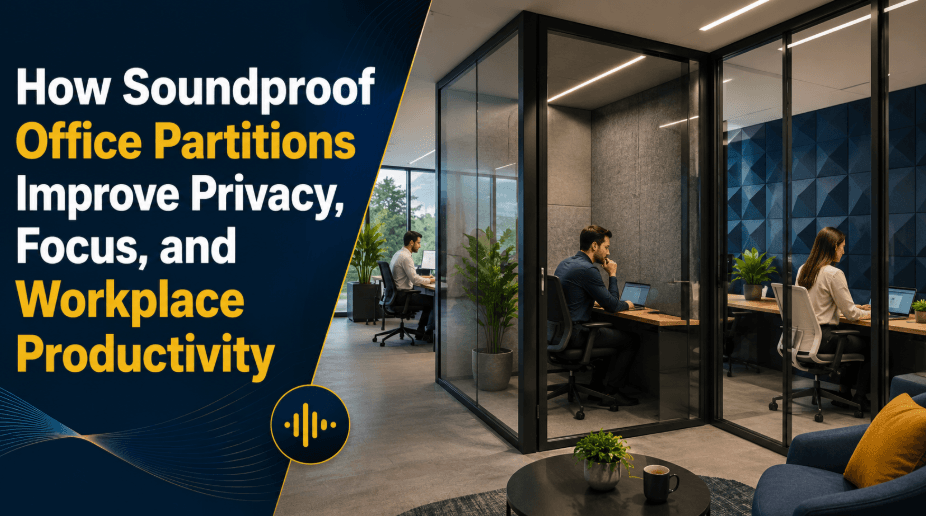
Glass acoustic partitions provide a modern look while maintaining openness. They allow light to pass through while still helping divide sound and space.
Fabric-covered panels are popular because they absorb sound well and come in many colors and styles. They can also soften the look of a workplace.
Modular partitions are useful for companies that expect change. They allow layouts to be adjusted without major construction.
A workplace does not always need one solution. Often, the best result comes from combining several types.
How Acoustic Partitions Support Different Work Zones
Modern offices usually include several types of work areas. Some are designed for collaboration, some for quiet focus, and others for meetings or calls. Acoustic partitions make it easier to define these zones without building permanent walls.
A quiet zone can be created using taller partitions and soft materials. This area may be used for writing, research, planning, or detailed tasks.
A collaboration area can use lower dividers that reduce noise without blocking communication. This allows teams to talk while keeping sound from spreading too far.
Phone booths or call corners can be supported with stronger acoustic panels. These spaces help employees handle calls without disturbing others.
Meeting areas can be separated from desk zones using glass or upholstered partitions. This gives groups a place to discuss ideas while reducing disruption.
Reception areas can also benefit from partitions. They help guide visitors, organize movement, and reduce noise from the entrance.
Good zoning makes an office feel more organized and easier to use.
Design Matters as Much as Function
Acoustic solutions should not make an office look dull or heavy. Partitions are highly visible, so they should support the overall style of the workplace. A poorly chosen divider can make a space feel temporary or crowded. A well-chosen one can improve both function and appearance.
Color is important. Neutral partitions create a calm and professional mood. Soft gray, beige, cream, or muted green can work well in offices that want a balanced feel. Darker tones such as charcoal or navy can add structure and sophistication.
Shape also matters. Straight panels feel clean and formal. Curved or rounded designs can make the workplace feel softer and more welcoming.
Texture can improve the visual experience. Fabric, felt, wood slats, and acoustic surfaces add warmth to a room that might otherwise feel too plain.
Artwork and decor can also help. Some offices use acoustic panels as part of the design rather than hiding them. Others combine sound management with creative wall pieces, plants, lighting, and carefully selected visuals.
Balancing Calm Design With Creative Energy
A productive workspace should not feel lifeless. While acoustic partitions can create calm and privacy, offices also need personality. Employees often feel more connected to spaces that include thoughtful design details.
This is where artwork, color, and visual themes become useful. A workplace can use neutral partitions for focus, then add personality through wall art, lounge decor, or meeting room accents. Creative offices may even explore office pop art ideas to bring color and energy into selected areas.
The key is balance. A quiet work zone may benefit from soft tones and minimal decoration. A brainstorming area may feel better with bold artwork and brighter colors. A client meeting room may need a more polished and refined look.
When acoustic planning and visual design work together, the office becomes more than a place to sit. It becomes an environment that supports thinking, communication, and brand identity.
Acoustic Partitions for Small Offices
Small offices often face serious noise challenges because everyone works close together. A single phone call can disturb the entire room. A quick team discussion can interrupt someone trying to focus. Because space is limited, building permanent walls may not be practical.
Freestanding partitions are especially useful in small offices. They can separate desks, create a small meeting corner, or block sound from printers and shared equipment. Desk screens can also help employees feel less exposed.
Small offices should avoid bulky partitions that make the room feel cramped. Lighter colors, slim designs, and partial-height panels often work better. Glass or fabric combinations can help maintain openness while still improving comfort.
Plants can also support the effect. While plants are not a replacement for acoustic materials, they can soften the space visually and help create a calmer atmosphere.
The goal in a small office is not to divide everything completely. It is to create enough separation for people to work comfortably.
See also: Small Business Audio Archives Using a YouTube to MP3 Convertor
Acoustic Partitions for Large Workplaces
Large offices need a more strategic approach. Noise often travels across wide open floors, especially when there are hard surfaces like concrete, glass, and metal. In these settings, partitions should be part of a larger acoustic plan.
Workstation clusters can be separated with acoustic dividers. Meeting rooms can use stronger partition systems. Breakout areas can include soft panels, rugs, and upholstered furniture to absorb sound. Call zones can be placed away from quiet work areas.
Large workplaces should also think about movement. People walking through the office create sound and visual distraction. Partitions can guide traffic and keep busy paths away from focused workstations.
Consistency matters in large spaces. If every area uses completely different partitions, the office can feel messy. A unified material or color palette helps create a professional look.
Mistakes to Avoid When Planning Office Partitions
One common mistake is choosing partitions only for appearance. A divider may look attractive but do little to manage sound. Always consider the material, height, thickness, and acoustic purpose.
Another mistake is using partitions that are too low. Very low dividers may provide some visual separation, but they often do not help much with sound. For privacy, height matters.
Some offices also over-divide the space. Too many partitions can make a workplace feel boxed in and unfriendly. The goal is balance, not isolation.
Poor placement is another issue. A partition placed in the wrong location may not solve the noise problem. It is important to identify where sound is coming from and where people need protection from distractions.
Finally, do not ignore lighting. Tall partitions can block natural light if they are not planned carefully. Glass sections, lighter colors, and smart positioning can help maintain brightness.
Creating a Workplace People Actually Enjoy
The best office design respects how people really work. Employees need places to focus, places to talk, places to think, and places to recharge. A single open room rarely supports all of these needs equally.
Soundproof office partitions help create a more human workplace. They reduce distractions, improve privacy, define zones, and make shared spaces easier to use. They also give companies flexibility because layouts can change as teams grow or work patterns shift.
When chosen carefully, partitions do not make an office feel closed off. They make it feel more intentional. They help employees feel considered, clients feel welcomed, and teams feel better supported.
A productive workplace is not built by furniture alone. It is shaped by sound, light, movement, comfort, and design. Acoustic partitions are one of the most practical ways to bring those elements together and create an office that works better for everyone.