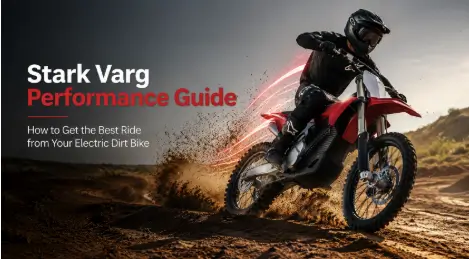
The Stark Varg has changed the way riders think about electric motocross. Instead of feeling like a quiet alternative to a petrol bike, it delivers serious race-ready performance with instant torque, advanced electronics, and enough power to challenge many traditional 450cc motocross machines. This Stark Varg Performance Guide explains how to get the best ride from this electric dirt bike, whether you are chasing sharper acceleration, smoother corner exits, better battery control, or a more confident feel on technical terrain.
What makes the Stark Varg special is not just that it is electric. It is the way the bike uses electric power. There is no clutch to manage, no gear shifting to interrupt momentum, and no engine vibration fighting against rider control. Power arrives instantly, smoothly, and with a level of adjustment that petrol bikes cannot easily match. For riders who want speed, precision, and control in one package, the Varg offers a very different riding experience.
Understanding the Stark Varg’s Electric Powertrain
The heart of the Stark Varg is its high-performance electric powertrain. Unlike a petrol engine that builds power through revs, the Varg delivers torque immediately. This gives the bike a strong launch out of corners, quick throttle response on climbs, and impressive drive on loose dirt.
One of the biggest advantages is adjustability. Riders can tune the power output to suit their skill level, track conditions, or riding style. That means the same bike can feel manageable for controlled practice and aggressive enough for competitive riding. This flexibility is a major reason why the Stark Varg has gained attention among motocross riders who want performance without constant mechanical tuning.
The single-speed drivetrain also makes the ride feel cleaner. There is no need to shift gears or search for the correct ratio before a jump or corner. The rider can focus more on line choice, body position, braking points, and throttle control. For many riders, this creates a smoother and more connected experience on the track.
Top Speed and Acceleration: What Riders Should Expect
The Stark Varg is built more for explosive motocross performance than long straight-line speed. Its top-speed capability is impressive, but the real strength is how quickly it gets up to speed. The instant torque gives it a hard-hitting launch that can surprise riders coming from petrol bikes.
On open ground, the bike can reach speeds that place it firmly in serious performance territory. However, motocross is rarely about top speed alone. A bike that accelerates quickly, exits corners strongly, and stays composed over bumps often feels faster than one that simply has a high number on paper.
To get the best performance, riders should focus on controlled acceleration rather than simply twisting the throttle fully. Electric torque can break rear traction quickly, especially on loose surfaces. Smooth throttle input helps the tyre bite into the ground, giving better drive and more control.
Helpful acceleration habits include:
- Rolling on the throttle smoothly when exiting corners
- Keeping body weight balanced over the rear wheel for traction
- Avoiding sudden throttle spikes on loose dirt
- Using lower power settings when learning a new track
- Increasing power gradually as confidence improves
Horsepower Output and Ride Modes
The Stark Varg is widely recognised for its high horsepower potential. In its strongest settings, it can produce power levels that compete with or exceed many petrol motocross bikes. This gives experienced riders a serious performance advantage, especially on fast tracks with long exits, big jumps, and deep loam.
However, more horsepower is not always better. The best setting depends on the rider and the terrain. A lower power mode can actually help improve lap times if the surface is slippery or the track has tight corners. Too much power can lead to wheelspin, fatigue, and poor corner control.
A smart approach is to build your own riding profiles. For example, you might use a softer setting for muddy conditions, a balanced setup for technical trails, and a more aggressive profile for open motocross tracks. The key is to match the bike’s power delivery to the ground beneath you.
The Stark Varg Performance Guide mindset is simple: use power as a tool, not as a challenge. The fastest riders are not always using maximum output. They are using the right output at the right time.
How the Stark Varg Challenges Petrol Motocross Bikes
Traditional petrol motocross bikes have long been judged by engine response, clutch feel, gear ratios, and exhaust character. The Stark Varg changes that conversation. It removes many of the moving parts and rider inputs that define petrol riding, then replaces them with instant electric response and software-based tuning.
This gives the bike several clear advantages:
- No gear changes during acceleration
- No clutch work in technical sections
- Less vibration through the frame
- Reduced maintenance compared with petrol engines
- Consistent power delivery from ride to ride
The absence of engine noise also changes the experience. Some riders love the quiet focus, while others miss the sound of a petrol bike. From a performance point of view, the quieter ride can help riders hear tyre contact, suspension movement, and track feedback more clearly.
Petrol bikes still have their loyal place in motocross, especially for riders who enjoy traditional engine character. But the Stark Varg proves that electric dirt bikes are not just future concepts. They are already capable of serious performance.
See also: How Soundproof Office Partitions Improve Privacy, Focus, and Workplace Productivity
Suspension Setup for Better Control
Power is only useful if the bike can handle it. The Stark Varg’s suspension plays a major role in how confidently the rider can use its performance. A poorly adjusted suspension setup can make the bike feel nervous, harsh, or unbalanced, even if the motor is working perfectly.
Start with sag. Correct sag helps the bike sit properly under the rider’s weight and keeps the front and rear balanced. If the rear sits too low, the front may feel light and vague. If it sits too high, the bike may feel unstable under braking.
After sag, focus on compression and rebound. Compression affects how the suspension absorbs impacts, while rebound controls how quickly it returns after being compressed. For motocross tracks with jumps and whoops, a firmer setup may offer better support. For trail riding or rough natural terrain, a slightly softer setting may improve comfort and grip.
Make small changes and test them one at a time. Changing too many settings at once makes it difficult to know what actually improved the ride.
Battery Management and Riding Range
Electric dirt bike performance is closely linked to battery management. The harder you ride, the faster the battery drains. Full-power acceleration, deep sand, steep climbs, and heavy braking zones all demand more energy.
To get the best ride, think about energy use as part of your riding strategy. Smooth throttle control not only improves traction but also helps preserve battery life. Carrying momentum through corners can reduce the need for hard acceleration on every exit.
Practical battery habits include:
- Starting rides with a full charge when possible
- Using moderate power settings for warm-up laps
- Avoiding unnecessary full-throttle bursts
- Planning shorter high-intensity sessions
- Charging between practice sessions when available
For many riders, the Varg’s range is enough for track sessions or trail rides, but expectations should match riding intensity. A relaxed trail pace and a race-speed motocross session will not use energy at the same rate.
Tyres, Braking, and Traction
The Stark Varg’s instant torque makes tyre choice extremely important. A worn rear tyre will struggle to handle the bike’s power, especially in soft dirt or mud. Good tyres help convert electric torque into forward motion instead of wheelspin.
Choose tyres based on the surface you ride most often. Soft-terrain tyres work better in sand and loam, while intermediate tyres suit mixed conditions. Hard-terrain tyres are better for compacted tracks and rocky trails.
Braking technique also matters. Since the bike carries speed quickly and quietly, riders may enter corners faster than expected. Look ahead, brake early, and keep your body position stable. A calm braking style helps the suspension stay balanced and prepares the bike for a cleaner corner exit.
Riding Technique for Maximum Performance
The Stark Varg rewards smooth, precise riding. Because the motor responds instantly, rough throttle habits become obvious. Riders who are aggressive without control may find the bike harder to manage, while riders with clean inputs can unlock impressive speed.
Focus on body position first. Keep your elbows up, grip the bike with your knees, and stay light on the bars. On corner exits, let the rear tyre build traction before asking for full drive. On jumps, steady throttle control helps keep the bike balanced in the air.
The lack of shifting can also change timing. On a petrol bike, gear changes often create natural rhythm points. On the Varg, acceleration is continuous, so riders must create rhythm through braking, body movement, and throttle control.
Maintenance Tips for Reliable Performance
One of the strong appeals of the Stark Varg is reduced maintenance compared with petrol motocross bikes. There are no oil changes, air filters, spark plugs, or fuel systems to manage in the same way. Still, the bike needs proper care to perform at its best.
Regular checks should include:
- Chain tension and lubrication
- Brake pad condition
- Tyre pressure and tread wear
- Spoke tension
- Suspension seals
- Battery charging habits
- Software updates when available
A clean bike also makes inspection easier. After muddy rides, wash carefully and avoid forcing high-pressure water into sensitive areas. Dry the bike properly before storage and keep charging equipment in good condition.
Who Will Benefit Most from the Stark Varg?
The Stark Varg suits riders who want strong performance, modern tuning options, and a cleaner riding experience. It is especially appealing for riders who enjoy motocross but want fewer engine maintenance tasks. It also works well for those who want adjustable power in one bike rather than needing different machines for different riding levels.
Beginners should respect its potential and start with lower power settings. Experienced riders can explore the stronger maps and take advantage of the bike’s aggressive acceleration. Trail riders may appreciate the quiet operation and smooth control, while track riders will enjoy the immediate drive out of corners.
This Stark Varg Performance Guide is not about treating the bike as a simple electric novelty. It is about understanding it as a serious performance machine with its own riding style.
Final Thoughts for a Faster, Smoother Ride
The Stark Varg proves that electric dirt bikes can compete with traditional motocross machines in power, response, and excitement. Its advanced powertrain, high horsepower potential, instant torque, and adjustable ride modes make it one of the most interesting dirt bikes available today.
To get the best from it, riders should focus on balance. Use the right power setting, manage traction, tune suspension carefully, and ride with smooth inputs. Maximum output may be exciting, but controlled performance is what creates faster laps and a more enjoyable ride.
The Stark Varg is not just about going electric. It is about riding smarter, adapting faster, and using modern engineering to make every session more precise, powerful, and rewarding.